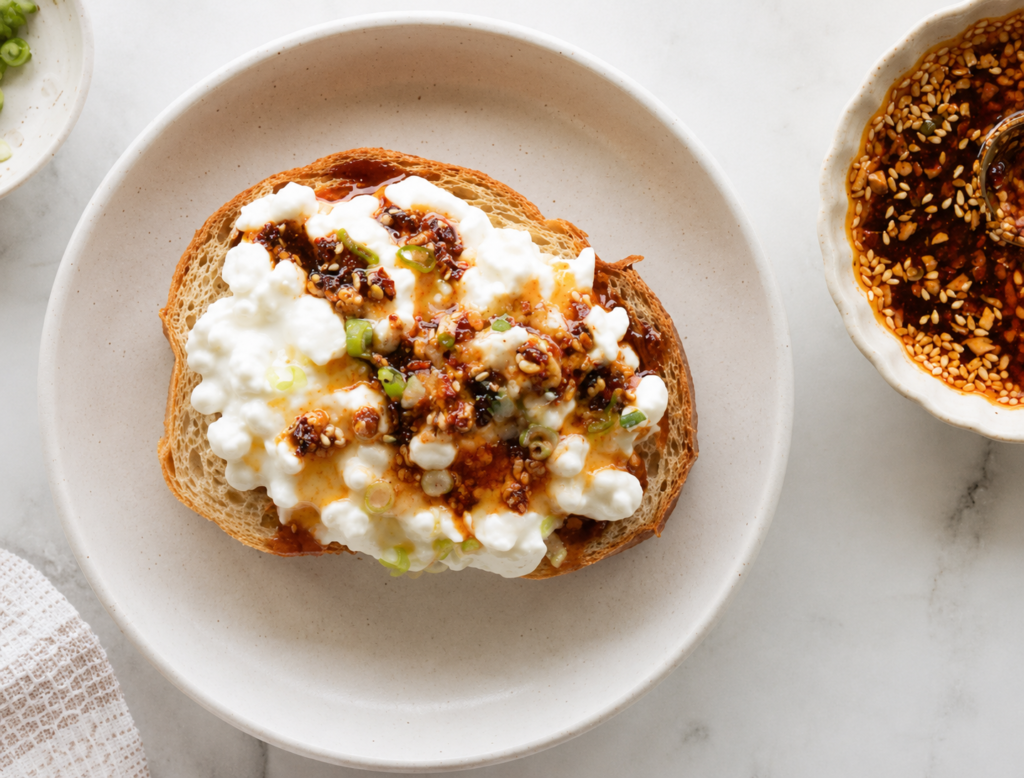
Cottage cheese is having a moment.
And as a dietitian, I have to say: I get it.
It’s one of those foods that somehow went from feeling very 1990s-diet-culture-coded to being blended into pasta sauces, piled onto sourdough, turned into ice cream, added to eggs, and basically given an entire rebrand by the internet.
But unlike a lot of food trends, this is one I actually hope sticks around.
Because cottage cheese is affordable, incredibly versatile, and one of the easiest ways to add a meaningful amount of protein to a meal without completely changing what you’re eating.
What Makes Cottage Cheese So Good?
Let’s start with the obvious: the protein.
A ½ cup serving of cottage cheese has around 14 grams of protein, which means a full cup can give you close to 28 grams depending on the brand.
Even better, most of that protein is casein, a slower-digesting protein. Your body breaks it down more gradually than some other protein sources, which can help meals feel more satisfying and keep you full longer.
Cottage cheese is also a complete protein, meaning it contains all nine essential amino acids your body can’t make on its own.
You’re getting calcium, too, and certain cultured cottage cheeses contain live and active cultures that can provide beneficial bacteria.
And despite the protein-food marketing circus happening in grocery stores right now, cottage cheese is refreshingly simple. You don’t need a 20-ingredient protein bar every time you want to increase your intake.
This is exactly the kind of food that makes hitting something like 90 grams of protein a day much easier without feeling like you have to live on grilled chicken breast.
What Should You Look for When Buying Cottage Cheese?
Cottage cheese is pretty straightforward, but I still flip the container around and check the ingredient list.
Ideally, you’re looking for something along the lines of:
Milk, cream, salt, cultures.
That’s really all it needs.
You’ll also see small curd and large curd options. Nutritionally, there isn’t a major reason to choose one over the other, so this mostly comes down to texture preference.
Personally, if you’re planning on blending cottage cheese into sauces, dips, pancake batter, or other recipes, small curd tends to blend especially well.
One brand I reach for often is Good Culture. I like the ingredient list, the texture, and how easily it works in both sweet and savory recipes.
Ways I Actually Use Cottage Cheese
The best thing about cottage cheese is that you absolutely do not have to sit down with a bowl of plain cottage cheese and pretend you’re excited about it.
There are so many better options.
If you like it sweet…
One of the easiest combinations is cottage cheese with berries, a drizzle of honey, and hemp hearts. You get protein from the cottage cheese, fiber from the berries, healthy fats from the hemp hearts, and something that actually tastes like a snack you wanted to eat.
You can also blend cottage cheese into the viral-style cottage cheese ice cream you’ve probably seen everywhere. Add fruit, nut butter, cocoa, or whatever flavor combination you’re craving and freeze it.
Another favorite is sourdough toast topped with cottage cheese, sliced pear, and almond butter. It’s sweet, creamy, crunchy, and a much more satisfying version of plain toast.
If you’re more of a savory person…
This is probably where I use it most.
Make an everything bagel cottage cheese bowl with veggies, avocado, everything seasoning, and whatever other toppings you have around.
Whisk or blend a scoop into scrambled eggs before cooking them. It makes them extra creamy while quietly increasing the protein.
You can blend cottage cheese into pasta sauce for a creamy texture without needing a heavy cream-based sauce.
Or spread it onto avocado toast before adding your avocado. It takes something that can otherwise be fairly low in protein and instantly makes it more balanced.
And if you swear you hate cottage cheese…
Blend it.
Seriously.
Once the curds are gone, cottage cheese becomes one of my favorite ingredients for adding protein and creaminess without dramatically changing the flavor of a recipe.
I blend it into pancake batter, use it in place of some or all of the ricotta in lasagna, and mix it into mashed potatoes.
It’s one of those ingredients you can sneak into foods you already make instead of trying to force yourself to eat an entirely separate “high-protein” meal.
The Cottage Cheese Recipes I Always Come Back To
This is also why you’ll see cottage cheese pop up throughout my recipes.
I’m always thinking about how we can build meals around protein, fiber, and healthy fats without making healthy eating feel like a second full-time job.
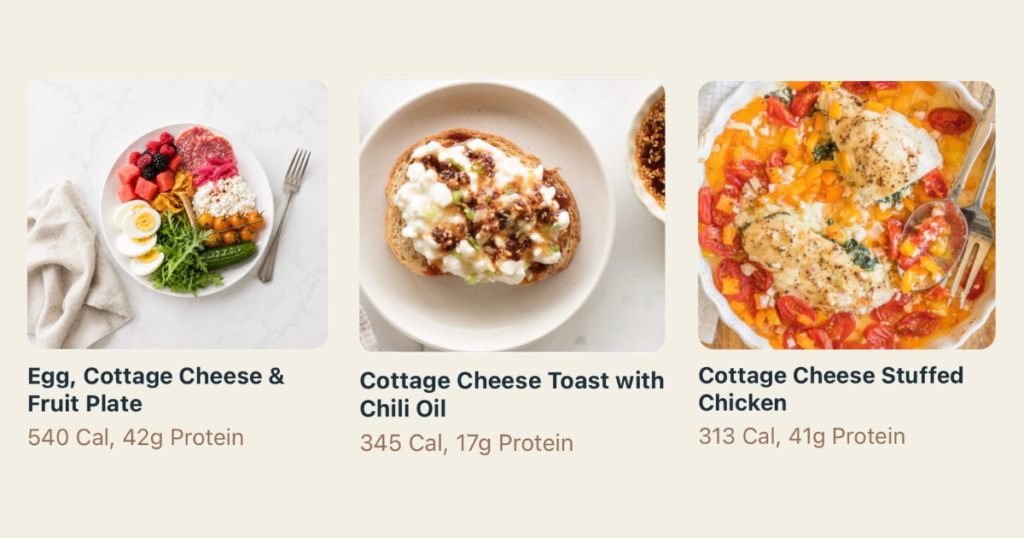
A few of my favorites from inside the Balanced Roots Nutrition App are:
The goal isn’t to suddenly make cottage cheese the star of every meal.
It’s to have a handful of simple ingredients in your fridge that make building a balanced meal easier.
And cottage cheese happens to be a really good one.
So yes, cottage cheese has officially received its internet renaissance.
For once, I’m completely on board.