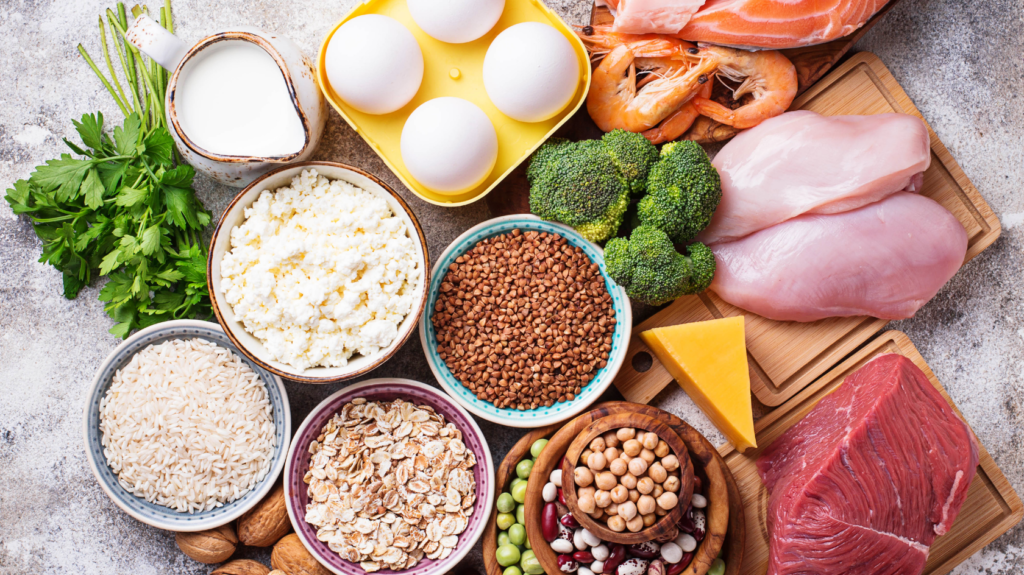
You’re eating the same meals you always have, but lately they don’t seem to keep you full. Your workouts feel harder to recover from. And your first instinct is to cut back on food because your body feels different.
Before you make your meals smaller, I want you to look at what’s actually on your plate.
Specifically, the protein.
As a dietitian, this is one of the first things I look at when helping women build more satisfying meals and support their muscle as they get older. A coffee for breakfast, a light salad for lunch, and some chicken at dinner can leave you with less protein than you realize.
Let’s make this easier.
What actually changes after 35?
Your 35th birthday doesn’t come with an automatic increase in protein needs. And being over 35 doesn’t automatically mean you’re in perimenopause.
Perimenopause is the transition leading up to menopause. It typically begins in your 40s, although it can start earlier. During this time, hormone levels fluctuate, and you may notice changes in your cycle, sleep, and how you feel.
As you move through midlife, protecting muscle deserves more attention. Aging and the menopause transition can affect muscle mass, which makes adequate protein and regular strength training valuable habits to build now.
You don’t need to wait until menopause to start putting protein on your plate consistently.
Why I want you thinking about muscle
When you’re trying to lose weight, it’s easy to focus on the scale.
But I also want you thinking about the muscle that helps you carry groceries, pick up your kids, get through your workouts, and stay strong in the years ahead.
Protein provides the building blocks your body needs to maintain and repair muscle. It can also help meals keep you satisfied longer. That matters when your “healthy lunch” leaves you searching the pantry an hour later.
And protein works alongside movement. Regular strength training helps maintain muscle and improve strength as we age. Think weights, resistance bands, or progressively challenging bodyweight exercises.
Start with something you can repeat. Consistency is much more useful than an intense routine you dread.
How much protein do you need?
I’m not going to give you a different number for every decade just because it looks good in a chart.
Your needs depend on your body size, activity, health, and goals.
Research on higher-protein eating for weight management supports a range of approximately 1.2 to 1.6 grams per kilogram of body weight per day. This can be a useful planning range for healthy adults pursuing weight loss or supporting an active lifestyle, rather than a universal perimenopause prescription.
To put that into everyday numbers:
| Body weight | Approximate daily protein at 1.2–1.6 g/kg |
|---|---|
| 130 pounds | 71–94 grams |
| 150 pounds | 82–109 grams |
| 170 pounds | 93–123 grams |
You don’t need to hit the upper end automatically. Use these numbers as a starting point for an individualized goal. If you have kidney disease or a prescribed protein restriction, work with your clinician or dietitian on your target.
This is why the 90 grams of protein in my 90-30-50 Method gives you a simple number to build meals around. Some women will need more, and individual needs still matter.
Start with breakfast
If you’re barely eating protein until dinner, breakfast is a practical place to start.
My go-to goal is around 30 grams of protein at breakfast. Building meals around roughly 25–30 grams also fits the meal amounts discussed in higher-protein weight-management research.
Here are a few ways to get there:
- Greek yogurt with cottage cheese, berries, and chia seeds.
- Eggs paired with cottage cheese and whole-grain toast.
- A smoothie with protein powder, milk or soy milk, and fruit.
- A tofu scramble with edamame and a side of toast.
Check portions and labels because protein amounts vary.
And a little reminder: two eggs provide roughly 12 grams of protein. They can absolutely be part of breakfast, but you’ll need another protein source to reach that 30-gram goal.
Add to the meals you already eat
You don’t need an entirely new menu.
You need a few reliable ways to make your current meals more complete.
Having oatmeal? Stir in protein powder or serve it with Greek yogurt.
Making a salad? Add a substantial portion of chicken, tuna, tofu, or edamame.
Having pasta? Keep the pasta and add turkey, shrimp, or a protein-rich plant option.
Eating leftovers? Check that you have enough of the protein component, especially if you’re splitting one serving across multiple meals.
This is the “add, don’t subtract” approach I come back to all the time. Keep foods you enjoy and build around them.
Protein belongs alongside fiber-rich carbohydrates and fats. That’s the whole reason my method includes all three.
Make your next meal the starting point
You don’t have to overhaul your entire day tonight.
Look at your next meal and ask: Where is the protein, and is there enough to make this meal satisfying?
Then choose one breakfast you can repeat this week. Put two easy protein options on your grocery list. Use the app’s meal plans and tracker to see how your meals add up.
If you want more structure, my 6-Week Hormone Reset brings the 90-30-50 Method into daily meal plans, with weekly grocery lists and the option to swap meals to fit your preferences and is available right here in the app.
Having a plan means fewer decisions when you’re busy and hungry.
Let’s get you balanced.