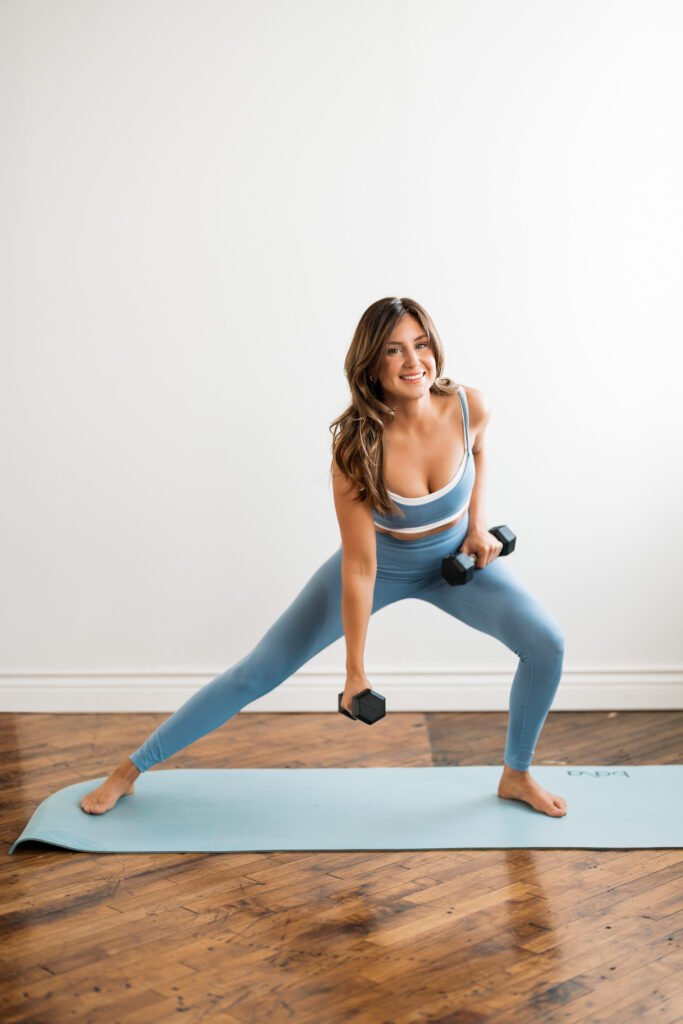
We live in a world that constantly tells women to be smaller.
But I want something better for you.
Be strong enough to carry your kids without your back screaming. Strong enough to haul the groceries inside in one trip. Strong enough to travel, get off the floor, lift the suitcase, protect your bones, and keep doing the things you love at 50, 60, 70, and beyond.
Thin is not the only goal available to you.
Build a body that can support your life.
Why Muscle Matters
Muscle is not just about looking toned. It is metabolically active tissue, which means your body uses energy to maintain it even while you are resting.
That does not mean gaining a few pounds of muscle suddenly turns your metabolism into a furnace. But over time, carrying more muscle supports a higher daily energy expenditure, better body composition, and more flexibility with food.
More muscle means your body has somewhere useful to put the fuel you eat.
Muscle acts like a storage site for glucose, pulling sugar from the bloodstream and storing it as glycogen to use for movement, workouts, and recovery. This is one reason strength training can improve insulin sensitivity and support steadier blood sugar.
It also becomes increasingly important with age. Women naturally begin losing muscle mass in adulthood, and that loss can accelerate during and after menopause.
Lifting is not an aesthetic extra.
It is prevention.
Your 90-30-50 Foundation Supports the Work
The same 90-30-50 structure you are already using gives your body the foundation it needs to train, recover, and build muscle.
Your protein supports muscle repair and growth.
Your carbohydrates replenish glycogen, so you have energy to train and recover.
Your healthy fats support hormones, satisfaction, and overall health.
Your fiber-rich foods bring in the vitamins and minerals your body needs to perform well and feel good doing it.
There is no need to overhaul the method or start eating like a bodybuilder. Keep building balanced meals, spread your protein throughout the day, and make sure you are eating enough to support the work you are asking your body to do.
Muscle is difficult to build when your body is constantly underfed.
The Best Exercises for Building Muscle
You do not need a complicated workout split or two hours in the gym.
Start with compound movements that work several muscle groups at once:
- Squats, deadlifts, and lunges
- Bench presses, push-ups, and shoulder presses
- Pull-ups and rows
Then add accessory movements to target specific muscles and build balanced strength:
- Glute bridges or hip thrusts
- Bicep curls
- Tricep extensions or dips
- Lateral raises
You can build muscle with dumbbells, barbells, resistance bands, machines, or your own body weight.
The equipment matters less than whether the exercise continues to challenge you.
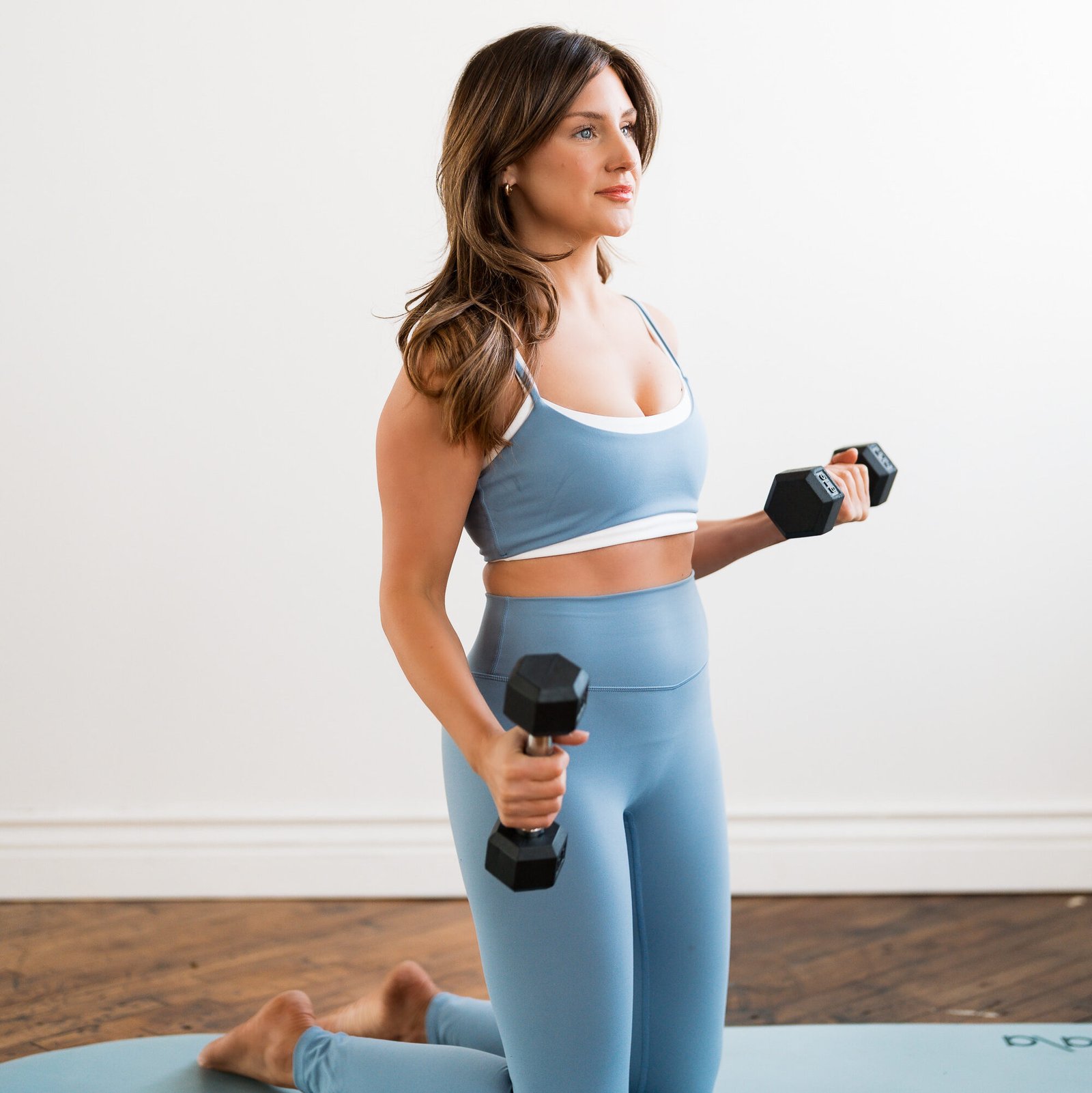
Progressive Overload Is the Part You Cannot Skip
Doing the exact same workout with the exact same weight forever will eventually stop producing results.
Progressive overload simply means gradually asking your muscles to do more.
That might look like:
- Increasing the weight
- Completing another repetition
- Adding a set
- Improving your range of motion
- Slowing the movement down
- Using better form and control
For muscle growth, a helpful range is three to four sets of roughly eight to 12 repetitions using a weight that feels challenging by the final few reps.
Those last reps should require focus. If you finish a set and feel like you could easily do 10 more, it is probably time to increase the weight.
How Often Should You Lift?
For most women, three to four strength-training sessions each week is enough to build meaningful strength and muscle.
You do not have to live in the gym.
Forty-five to 60 focused minutes is plenty, and shorter sessions can still be effective when they are consistent and intentional.
Quality beats endless workouts.
Recovery matters too. Muscle is challenged during your workout, but it is repaired and built afterward. That means rest days, sleep, hydration, and adequate food all count as part of the plan.
Keep Walking
Strength training and walking work beautifully together.
Walking keeps your daily movement up, supports cardiovascular health, and helps with recovery without adding another intense demand to your week.
You do not have to choose between lifting and hitting your steps.
Lift to build and preserve muscle.
Walk to keep your body moving consistently.
The Benefits Go Far Beyond Metabolism
Strength training can improve insulin sensitivity and help your muscles manage glucose more effectively after meals.
It also supports bone density, which becomes especially important as estrogen levels begin to decline during menopause.
More strength can mean a lower risk of falls, fractures, and losing mobility later in life.
Then there are the benefits you feel much sooner.
More energy.
Better posture.
Improved confidence.
Less fear around picking up something heavy.
The satisfaction of realizing that the weight that once felt impossible now feels manageable.
That kind of progress changes the way you move through the world.
No, Lifting Will Not Make You Bulky
Women have spent decades being told to do endless cardio, eat as little as possible, and use tiny weights so they do not accidentally become “too muscular.”
Meanwhile, muscle is one of the very things that creates the strong, defined body many women are trying to achieve.
Building significant muscle takes time, consistency, adequate food, and intentional training.
You are not going to wake up bulky because you picked up a pair of dumbbells three times this week.
You are far more likely to feel stronger, stand taller, improve your body composition, and become more capable in your actual life.
Build Strength for the Woman You Are Becoming
Lift for the version of you carrying a sleeping child up the stairs.
Lift for the version of you who wants more freedom with food.
Lift for the version of you entering menopause with muscle on her frame and strength in her bones.
Lift for the 70-year-old version of you who still wants to travel, garden, play with her grandchildren, and get up from the floor without assistance.
Muscle gives you options.
Keep following your 90-30-50 foundation. Strength train three to four times a week. Challenge yourself gradually. Walk often. Recover well.
Lifting may change the way your body looks.
More importantly, it changes what your body can do.