
Maybe the meals that used to keep you full suddenly do not.
Maybe your energy crashes by 3 PM, your sleep feels unpredictable, your cravings are louder, and weight seems to settle around your middle even though you have not dramatically changed how you eat.
You may be wondering, “What am I doing wrong?”
Possibly nothing.
Your body may simply need a different kind of support than it did five, ten, or fifteen years ago.
Perimenopause is a season of major hormonal fluctuation, and those changes can affect everything from your menstrual cycle and sleep to your body composition, appetite, mood, and energy. This does not mean your body is broken. It means the approach that worked for you at 25 may not be the approach that supports you best now.
And eating less is not automatically the answer.
For many women, the better place to begin is by making sure they are eating enough of the nutrients their bodies need to preserve muscle, support digestion, steady blood sugar, and feel satisfied.
That is exactly where the 90-30-50 Method comes in.
What Is Perimenopause?
Perimenopause is the transition leading up to menopause. During this time, the ovaries begin producing hormones less predictably, which can lead to changing menstrual cycles and symptoms such as hot flashes, night sweats, sleep disruption, mood changes, brain fog, and changes in body composition.
It often begins sometime between ages 45 and 55, although some women notice changes earlier, and it may last for several years. Menopause itself is confirmed after you have gone 12 consecutive months without a menstrual period or spotting.
The tricky part is that perimenopause does not always announce itself clearly.
Symptoms can be blamed on stress, parenting, work, poor sleep, or “just getting older.” And honestly, all of those things can overlap. That is why so many women spend years feeling unlike themselves without realizing hormones may be part of the picture.
Why Your Body May Feel Completely Different
Hormonal changes do not happen in isolation. Perimenopause often arrives during a time when women are also juggling careers, children, aging parents, full schedules, interrupted sleep, and years of dieting or putting their own needs last.
At the same time, women may begin experiencing changes in muscle mass, fat distribution, cholesterol, and blood sugar regulation. The National Institute on Aging notes that women may notice a larger waist, muscle loss, fat gain, and changes in concentration during the menopausal transition, although researchers are still studying how much is driven by hormones, aging, lifestyle, and the combination of all three.
This can show up as:
- Feeling less satisfied after meals
- More noticeable energy crashes
- Changes in where your body stores fat
- Difficulty maintaining muscle
- Increased cravings after a poor night of sleep
- Feeling like your previous diet or exercise routine suddenly stopped working
Your body is not betraying you. Its needs are changing.
Why “Eat Less and Move More” Is Not Enough
When women notice their bodies changing, the immediate reaction is often to cut calories, skip breakfast, remove carbohydrates, fear dietary fat, or add more cardio.
That can create a frustrating cycle.
You eat less, but you also struggle to consume enough protein and micronutrients. You feel hungrier, your workouts suffer, your energy drops, and maintaining muscle becomes more difficult. Then, because you feel as though nothing is working, you restrict even more.
The goal during perimenopause should not be to eat the smallest amount of food possible.
The goal should be to create meals that help you:
- Preserve and build lean muscle
- Stay full between meals
- Support regular digestion
- Manage energy and blood sugar
- Fuel strength training and daily movement
- Meet your nutritional needs consistently
This is a nourishment strategy, not a punishment strategy.
How the 90-30-50 Method Supports Perimenopause
The foundation of the 90-30-50 Method is simple:
At least 90 grams of protein, at least 30 grams of fiber, and at least 50 grams of healthy fats each day.
These numbers are minimums, not maximums.
Depending on your body size, activity level, health history, and goals, you may need more. Many active women feel better closer to 100 to 120 grams of protein, for example. Individual nutrient needs vary, so these targets should be adjusted with your healthcare provider or dietitian when necessary.
The bigger philosophy is this:
Instead of beginning with what you need to remove, begin with what your body needs you to add.
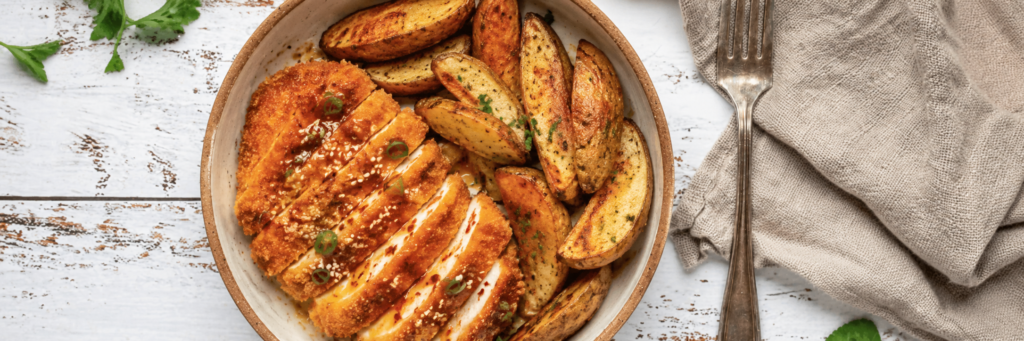
Why Protein Matters More Than Ever
Muscle is not only about looking toned.
Muscle supports strength, mobility, bone health, blood sugar regulation, metabolic health, and your ability to remain active as you age.
That makes protein especially important during midlife.
Protein also makes meals more satisfying and can help reduce the constant mental chatter about food that often shows up when meals are too small or unbalanced.
A helpful target is approximately 25 to 30 grams of protein at each main meal. Rather than eating very little protein throughout the day and trying to catch up at dinner, spread it more evenly.
That may look like:
- Greek yogurt with protein powder, berries, and chia seeds
- Eggs with cottage cheese and a high-fiber wrap
- Chicken or salmon added to a lunch bowl
- Edamame or tofu in a stir-fry
- High-protein pasta with ground turkey
- A smoothie made with protein powder and Greek yogurt
You do not have to eat plain chicken breast all day. You simply need to make protein a visible part of each meal.
Why Fiber Matters During Perimenopause
Fiber supports digestion, regular bowel movements, cholesterol management, blood sugar regulation, and the health of your gut microbiome.
It can also make meals much more filling.
Many women believe they eat a high-fiber diet because they regularly eat salads or vegetables. But when they begin tracking, they realize they are still falling well below their target.
Getting to at least 30 grams may require more intentional sources, such as:
- Berries
- Chia seeds
- Ground flaxseed
- Beans and lentils
- Oats
- Avocado
- High-fiber wraps
- Whole-grain bread
- Cruciferous vegetables
- Pears and apples
Do not jump from a very low-fiber diet to 30 grams overnight. That is a fast track to feeling painfully bloated.
Increase fiber gradually, drink enough water, and give your digestive system time to adjust.
Why Healthy Fats Still Belong on Your Plate
Dietary fat is often the first thing women cut when they want to lose weight.
But healthy fats support satisfaction, brain health, cell function, and the absorption of fat-soluble vitamins A, D, E, and K.
Fat also slows digestion, which can help a meal hold you longer than a meal built from lean protein and vegetables alone.
Good options include:
- Avocado
- Extra-virgin olive oil
- Nuts
- Nut butter
- Chia and flaxseed
- Pumpkin seeds
- Olives
- Egg yolks
- Salmon and other fatty fish
- Full-fat or reduced-fat dairy, depending on your needs and preferences
Omega-3 fats from foods such as salmon, walnuts, chia, and flax can be especially valuable within an overall heart-healthy eating pattern.
This does not mean adding unlimited fat to every meal. It means refusing to treat fat as something you need to eliminate completely.
Can 90-30-50 Eliminate Perimenopause Symptoms?
Nutrition can support your overall health during perimenopause, but it is important to be honest about what food can and cannot do.
Eating more protein, fiber, and healthy fats may help you feel fuller, maintain muscle, support digestion, and create steadier energy. Those changes can make symptoms and daily life feel more manageable.
But nutrition is not a guaranteed cure for hot flashes, sleep problems, depression, painful sex, or other disruptive symptoms.
Perimenopause is a medical transition, and you deserve medical support when symptoms are affecting your quality of life. Lifestyle changes, hormone therapy, and nonhormonal medications may all be appropriate depending on your symptoms, preferences, and health history. The Menopause Society and the National Institute on Aging both recommend speaking with a qualified healthcare professional about symptoms and treatment options.
Food is one important part of the conversation. It does not have to carry the entire burden.
What Not to Do in Perimenopause
You do not need to panic and overhaul your entire life.
But there are a few common approaches worth reconsidering:
Do not slash calories aggressively
A small, sustainable calorie deficit may be appropriate for some women pursuing fat loss. But consistently under-eating makes it much harder to consume enough protein, fiber, healthy fats, vitamins, and minerals.
Do not skip meals if it leaves you ravenous later
Some women feel great with longer gaps between meals. Others experience headaches, irritability, energy crashes, or intense evening hunger. Pay attention to your actual response rather than forcing yourself into a meal schedule that does not serve you.
Do not fear dietary fat
You need fat in your diet. Choose nourishing sources and include portions that help meals feel satisfying.
Do not rely on cardio alone
Walking, running, cycling, and other forms of cardio are wonderful for heart health and fitness. But strength training provides a specific stimulus that helps maintain and build muscle.
Aim to include resistance training two to four times per week based on your experience, recovery, and schedule.
Do not assume the plan that worked at 25 must work forever
Changing your approach is not giving up. It is responding intelligently to the body you have today.
Do not waste money on a “detox”
Your body already has organs responsible for processing and eliminating waste. Support them with adequate nutrition, fiber, hydration, movement, sleep, and medical care rather than extreme cleanses.
Where to Start This Week
You do not need a new personality, an empty refrigerator, or a perfectly color-coded meal plan.
Start with one meal.
Build a protein-forward breakfast
Try to get 25 to 30 grams of protein in the morning.
That might be Greek yogurt mixed with protein powder, berries, and chia seeds. It could be eggs with cottage cheese and toast. It might be a smoothie made with milk, Greek yogurt, frozen fruit, and protein powder.
Breakfast is not magically more important than every other meal, but starting the day with a substantial meal can make it much easier to hit your daily targets.
Add fiber to food you already enjoy
Do not reinvent every meal.
Add berries to yogurt. Put chia in your smoothie. Add beans to taco meat. Use a high-fiber wrap. Toss frozen vegetables into pasta sauce.
Small additions count.
Include a healthy fat on purpose
Add avocado to toast. Use olive oil on roasted vegetables. Keep the egg yolks. Sprinkle walnuts over oatmeal.
You do not need to fear the ingredient that makes your meal satisfying.
Strength train consistently
Two to four sessions per week can be incredibly valuable, and they do not have to be an hour long.
Twenty focused minutes still counts.
Track temporarily to learn
You do not have to track food forever.
Tracking for a couple of weeks can show you whether you are consistently reaching your protein, fiber, and healthy-fat minimums. Once you understand what those portions look like, you may feel comfortable transitioning to a less structured approach.
Your Body Is Asking for Support, Not Punishment
Perimenopause can make you feel as though the rules changed overnight.
Your appetite feels different. Your body responds differently. Your energy is less predictable. The things that used to work may not work in quite the same way anymore.
But the answer is not to declare war on your body.
It is to support it more intentionally.
Prioritize protein. Build in fiber. Stop fearing healthy fats. Lift weights. Eat meals that keep you full. Ask for medical help when symptoms are interfering with your life.
You are not failing because your body needs something different now.
You are learning how to care for it in a new season.
The 90-30-50 Method gives you a simple place to begin: at least 90 grams of protein, 30 grams of fiber, and 50 grams of healthy fats every day.
Not another list of foods you cannot eat.
A foundation you can build from.