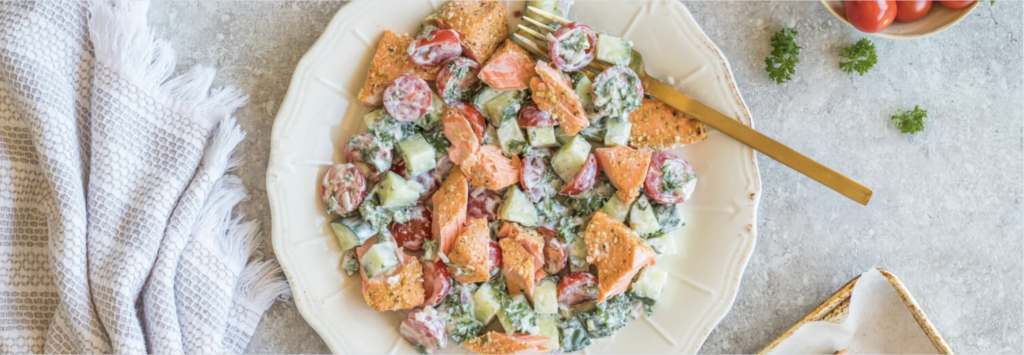
Inside The 90-30-50 Method, healthy fats have a clear daily minimum: 50 grams.
That number is there because fat is not optional.
For years, women were taught to treat fat like the problem. Low-fat everything. Fat-free yogurt. Dry salads. Egg whites only. Dressing on the side. Almonds counted out like contraband.
And then everyone wondered why they were hungry, craving sweets, dealing with low energy, struggling with hormones, and thinking about snacks all day.
Fat is not the villain.
Your body needs it.
Healthy fats help support hormone production, brain function, blood sugar balance, nutrient absorption, fullness, and long-term metabolic health. They also make meals feel like actual meals instead of sad little attempts at discipline.
That is why 50 grams is the minimum inside this method.
It gives your body enough dietary fat to function well while still leaving room to build meals with protein and fiber.
Because the goal is not to eat as little fat as possible.
The goal is to eat enough of the right fats consistently.
Why fat matters for hormones
Hormones need fat.
That is the simplest way to say it.
Your body uses fats and cholesterol as building blocks for hormones, including sex hormones like estrogen, progesterone, and testosterone.
So when women chronically under-eat fat, it can affect how the body feels and functions. Low-fat eating can show up as low energy, mood swings, cravings, poor satiety, cycle changes, and feeling like your body is constantly running on fumes.
Of course, fat intake is not the only thing that affects hormones. Stress, sleep, blood sugar, gut health, exercise, and overall calorie intake all matter too.
But healthy fats are foundational.
And if your meals are mostly lean protein, lettuce, fruit, rice cakes, and coffee, we need to have a little chat.
That is not a hormone-supportive plan.
That is a “why am I starving by 3 p.m.?” plan.
Fat helps you feel full
Fat slows digestion and helps meals feel more satisfying.
This matters because a meal can be technically “healthy” and still not hold you for very long.
A salad with grilled chicken and no dressing may look like the “good” choice, but if there is no fat and not much fiber, you may be hungry again an hour later.
A smoothie with protein powder, fruit, and water may hit protein, but it may not actually satisfy you if it has no healthy fat.
A plate of egg whites and dry toast might feel like a diet breakfast, but it is probably not doing much for fullness.
That is not a willpower problem.
That is a meal construction problem.
When you add healthy fats like avocado, olive oil, eggs, nuts, seeds, salmon, nut butter, chia, flax, or full-fat dairy when tolerated, meals become more satisfying and easier to stick with.
You are not trying to white-knuckle your way through the day.
You are building meals that actually hold you.
Fat supports blood sugar balance
Fat also plays a role in blood sugar stability.
When paired with protein and fiber, healthy fats help slow the digestion of a meal. That steadier digestion can help reduce the spike-and-crash feeling that leads to cravings, low energy, and the sudden need for “just a little something sweet.”
This is why The 90-30-50 Method works as a structure.
Protein gives the meal strength.
Fiber gives it staying power.
Healthy fat helps with satisfaction and steadiness.
You need all three.
A meal that is low in fat may digest too quickly and leave you looking for more food soon after. A meal that includes healthy fat is more likely to feel complete.
And complete meals are the whole point.
Not tiny meals.
Not punishment meals.
Not “I was good all day and then ate the pantry at night” meals.
Real meals.
Fat helps you absorb nutrients
Some vitamins need fat in order to be absorbed well.
Vitamins A, D, E, and K are fat-soluble, which means your body absorbs them better when dietary fat is present.
So if you are eating a big beautiful salad with vegetables but using no dressing, no avocado, no nuts, no seeds, and no olive oil, you may not be getting as much benefit from those nutrients as you think.
This is your permission to stop eating dry salads like you are trying to prove a point.
Add the dressing.
Use the olive oil.
Put avocado on the bowl.
Sprinkle the seeds.
The goal is not to make the meal heavier. The goal is to make the meal work better.
Fat supports brain health and mood
Your brain needs fat too.
Healthy fats help support brain function, mood, focus, and nervous system health. Omega-3 fats in particular, found in foods like salmon, sardines, trout, chia seeds, flaxseed, and walnuts, are important for overall health and inflammation support.
This is one of the reasons very low-fat eating can feel awful for some women.
You may feel foggy, irritable, anxious, snacky, or like you cannot get through the day without another coffee.
Again, fat is not the only factor.
But if your meals have almost no fat, your body is going to notice.
And it may not be subtle about it.
“Healthy fat” does not mean unlimited fat
Now, let’s be clear.
The 50g minimum is not an invitation to pour half a bottle of olive oil on everything and call it wellness.
Fat is important, but it is also calorie-dense. That means portions still matter, especially if fat loss is one of your goals.
This is where a lot of people swing too far in either direction.
They either avoid fat completely, or they hear “healthy fat” and start adding nuts, avocado, peanut butter, olive oil, cheese, and coconut milk to the same meal like they are building a charcuterie board for survival.
We do not need to be dramatic.
The goal is enough fat, not random fat everywhere.
Inside the app, the recipes are built to help you include healthy fats in a balanced way so you are not guessing. You will see fats paired with protein and fiber so the meal feels satisfying without turning into a calorie bomb.
That balance matters.
What counts as healthy fat?
Healthy fats can come from a lot of real food sources.
Think olive oil, avocado, nuts, seeds, chia, flax, hemp hearts, nut butter, eggs, salmon, sardines, trout, tuna, olives, and full-fat dairy if your body tolerates it.
You do not need every meal to include all of these.
Please do not turn breakfast into a fat scavenger hunt.
You just need healthy fats to show up consistently across the day.
Maybe that looks like eggs at breakfast.
Avocado or olive oil at lunch.
Salmon, pesto, nuts, seeds, or dressing at dinner.
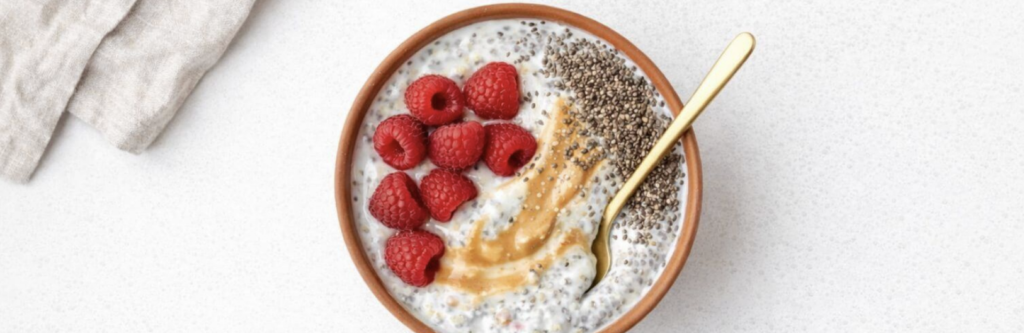
A snack with nut butter, chia pudding, Greek yogurt, or a trail mix-style combo.
A few steady additions can make a big difference.
Signs you may not be getting enough fat
Low fat intake can show up in ways that are easy to blame on something else.
You may feel hungry soon after eating.
You may crave sweets or feel snacky even after “healthy” meals.
Your energy may feel flat.
Your mood may feel more irritable or unstable.
Your cycle may feel off.
Your skin may feel dry.
You may struggle to feel satisfied unless you keep grazing.
Of course, these symptoms can have many causes, but if your meals are consistently low in fat, it is worth looking at.
Especially if you are hitting protein but still feel like something is missing.
Sometimes the missing piece is not more discipline.
Sometimes it is literally the fat you have been trying to avoid.
How the app helps you hit 50 grams
You do not need to memorize fat grams or guess which meals are balanced.
That is why the recipes and programs inside the app are built around The 90-30-50 Method from the start.
You will see healthy fats included in ways that make sense: olive oil-based dressings, avocado, nuts, seeds, eggs, salmon, nut butters, chia, flax, pesto, full-fat options when appropriate, and other ingredients that help meals feel complete.
The point is not to make every recipe “high fat.”
The point is to help you consistently reach the minimum while still hitting your protein and fiber goals.
Because when protein, fiber, and healthy fats are all present, meals work better.
They hold you longer.
They support steadier energy.
They help cravings calm down.
They make the method easier to repeat in real life.
And that is the whole point.
Why 50 grams is the minimum
The 50g healthy fat minimum is a pillar of The 90-30-50 Method because your body needs fat for hormones, brain function, nutrient absorption, fullness, blood sugar stability, and long-term health.
It is not there to make food complicated.
It is there to keep you from accidentally under-eating one of the nutrients your body relies on most.
Fat helps meals feel satisfying.
It helps your body absorb key vitamins.
It supports hormone production.
It keeps you from building meals that look “good” but leave you hungry, tired, and raiding the pantry two hours later.
So no, the goal is not to eat low fat.
The goal is to eat smart fat.
Enough to support your body.
Enough to make meals satisfying.
Enough to stop treating hunger like a personal failure.
That is the point of 50 grams.
It is a daily baseline that helps your body function, feel, and recover better.