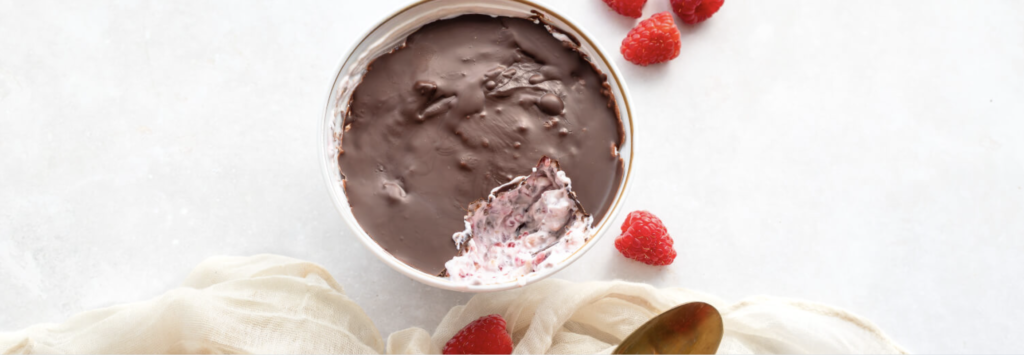
You ate the salad.
You added the berries.
You hit your protein goal, skipped the drive-thru, packed the “healthy” snacks, and drank the green smoothie.
So why, by 4 p.m., do your jeans suddenly feel two sizes smaller?
This is the point where a lot of women immediately assume something has gone wrong.
Maybe dairy is the problem. Maybe gluten has to go. Maybe fruit has too much sugar. Maybe broccoli is “inflammatory.” Maybe you need a detox, a cleanse, a supplement stack, or a refrigerator full of foods labeled gut-friendly.
Or maybe your digestive system is simply responding to how much you ate, how quickly you ate it, how much fiber you suddenly added, how hydrated you are, and whether your gut has had time to adjust.
Bloating does not automatically mean you ate badly.
And it definitely does not mean you gained body fat between breakfast and dinner.
Bloating is incredibly common, even among people eating balanced, nutrient-dense diets. In fact, some of the habits we associate with “cleaning up” our nutrition can temporarily increase bloating if we change too much too quickly.
The answer is usually not to cut out every food that makes your stomach feel full.
It is to understand what may be happening and make a few strategic adjustments.
First, What Is Bloating?
Bloating is the sensation of fullness, pressure, tightness, or swelling in your abdomen. Sometimes your stomach may look visibly more distended. Other times, you may simply feel uncomfortable even if no one else can see a difference.
It can be influenced by:
- Gas produced during digestion
- Constipation or slower bowel movements
- Swallowing air while eating
- Hormonal fluctuations
- Changes in fiber intake
- Large meals
- Hydration
- Stress
- Certain ingredients or food intolerances
That is why blaming one single food is often too simplistic.
Your body is not a math equation where one bite of cauliflower equals three hours of bloating. Digestion is affected by the whole picture, including your meal pattern, portion sizes, eating speed, stress level, hydration, and what your body is accustomed to eating.
So before you start removing entire food groups, let’s look at some of the more likely reasons you may feel bloated while eating a healthy diet.
1. You Increased Your Fiber Too Quickly
Fiber is one of the best things you can add to your diet.
It supports regular bowel movements, feeds beneficial gut bacteria, helps manage blood sugar, supports healthy cholesterol levels, and keeps you feeling satisfied after meals.
But going from very little fiber to a high-fiber diet overnight can feel like sending your digestive system from the couch straight into a marathon.
Your gut may need time to catch up.
If your previous meals were relatively low in fruits, vegetables, beans, whole grains, nuts, and seeds, then suddenly adding chia pudding, giant salads, lentil bowls, high-fiber wraps, and fiber-packed snack bars may lead to extra gas and pressure.
That does not mean fiber is bad for you.
It means the increase may have been too aggressive.
Try increasing fiber gradually rather than changing every meal at once. Add one higher-fiber food at a time and pay attention to how your body responds. Make sure you are also drinking enough water, because fiber relies on fluid to move comfortably through the digestive tract.
The goal is not to eat less fiber forever.
The goal is to give your gut enough time and support to adapt.
2. You’re Filling Up on Raw Vegetables
Raw vegetables are nutritious, crunchy, colorful, and easy to throw into a salad.
They can also be harder for some people to digest, especially in large quantities.
A giant bowl filled with raw kale, cabbage, broccoli, cauliflower, peppers, onions, and carrots may look like the ultimate health meal, but your digestive system may experience it as a serious workload.
Cooking vegetables helps soften their structure, which can make them easier to break down.
You do not need to stop eating vegetables or replace every meal with beige food. Simply experiment with preparation.
Try:
- Roasting broccoli or cauliflower
- Sautéing spinach, peppers, or zucchini
- Steaming carrots or green beans
- Adding cooked vegetables to grain bowls
- Using soup, stir-fry, or sheet-pan meals instead of another cold salad
You are not losing the value of the vegetables because you cooked them.
Sometimes warm, softened foods are exactly what your digestive system needs.
A salad is not automatically healthier than a bowl of roasted vegetables just because it requires more chewing.
3. You’re Eating Too Fast
You can build the most nutritionally perfect meal on the planet and still feel uncomfortable if you eat it in six minutes while answering emails.
Eating quickly often causes you to swallow more air, which may contribute to gas and bloating. It also gives your body less time to register fullness, making it easier to eat past the point of comfort.
And despite what our calendars seem to suggest, digestion does not begin once food reaches your stomach.
It begins in your mouth.
Chewing helps mechanically break food down and mixes it with saliva before it moves through the rest of the digestive system. When you barely chew, your stomach and intestines have more work to do later.
You do not need to turn every lunch into a silent, candlelit mindfulness retreat.
Just slow the pace.
Put your fork down occasionally. Take a breath between bites. Sit down instead of eating over the kitchen counter. Chew until the food is actually broken down instead of swallowing after two bites.
Even adding five extra minutes to a meal can make a difference.
4. Your “Healthy” Snacks Contain Ingredients Your Gut Does Not Love
The protein bar aisle has become the Wild West of digestive ingredients.
A snack may have impressive numbers on the label, but that does not automatically mean it will feel good in your body.
Many low-sugar, low-carb, keto, protein-packed, or high-fiber products contain ingredients such as:
- Erythritol
- Xylitol
- Sorbitol
- Maltitol
- Chicory root
- Inulin
- Large amounts of isolated fiber
These ingredients are not automatically dangerous or “bad.” Plenty of people tolerate them without any issues.
But for some individuals, they can cause gas, bloating, cramping, or changes in bowel movements, especially when eaten in larger quantities.
And it adds up quickly.
You may have a high-fiber bar in the morning, a low-carb wrap at lunch, a protein snack in the afternoon, and a sugar-free dessert after dinner. Each product may seem harmless on its own, but together, they can create a significant amount of added fiber or sugar alcohols in one day.
If you notice bloating after certain packaged snacks, read the ingredient list rather than only looking at the calories or protein.
You may not need to eliminate the product forever. You may simply need a smaller portion, a different brand, or fewer heavily fortified foods throughout the day.
Sometimes a basic snack like Greek yogurt and berries, an apple with peanut butter, eggs with toast, or cottage cheese with fruit is easier on digestion than a bar engineered to contain 20 grams of fiber and taste vaguely like birthday cake.
5. You’re Not Drinking Enough Water
Increasing fiber without increasing fluids is like adding more cars to a highway without opening another lane.
Things may slow down.
Fiber absorbs water and helps add bulk to stool. Without enough fluid, bowel movements may become harder or less frequent, contributing to constipation and the bloating that often comes with it.
And no, three coffees and an energy drink do not necessarily count as a hydration strategy.
You do not need to carry a gallon jug everywhere you go, but you do need to drink consistently throughout the day.
Try keeping water visible, drinking with meals, and pairing hydration with habits you already have. Drink a glass after waking up, refill your water when you make coffee, or have water nearby during your afternoon work block.
Pay attention to thirst, urine color, activity level, climate, and how much fiber you are eating.
The more you ask your digestive system to process, the more important hydration becomes.
6. You’re Eating Healthy Foods, But Your Meals Aren’t Balanced
A plate of vegetables is nutritious.
It may not be a complete meal.
The same goes for eating only fruit for breakfast, grabbing a protein shake by itself, or having plain chicken and lettuce for lunch.
Meals that are technically “healthy” can still leave you hungry, unsatisfied, and rummaging through the pantry an hour later.
They may also lead to irregular meal patterns where you eat very lightly for most of the day and then consume a much larger meal at night. That sudden volume can leave you feeling overly full and bloated, even if every ingredient in the meal is nutrient-dense.
This is why I teach the 90-30-50 Method.
Rather than obsessing over individual foods, focus on consistently combining protein, fiber, and healthy fats throughout the day.
Protein helps support muscle, satiety, and stable energy.
Fiber supports fullness, digestion, blood sugar balance, and regularity.
Healthy fats improve satisfaction and help your body absorb fat-soluble nutrients.
A balanced meal might look like:
- Eggs, whole-grain toast, avocado, and berries
- Chicken, roasted vegetables, rice, and olive oil
- Greek yogurt, chia seeds, fruit, and nut butter
- Salmon, potatoes, cooked greens, and a yogurt-based sauce
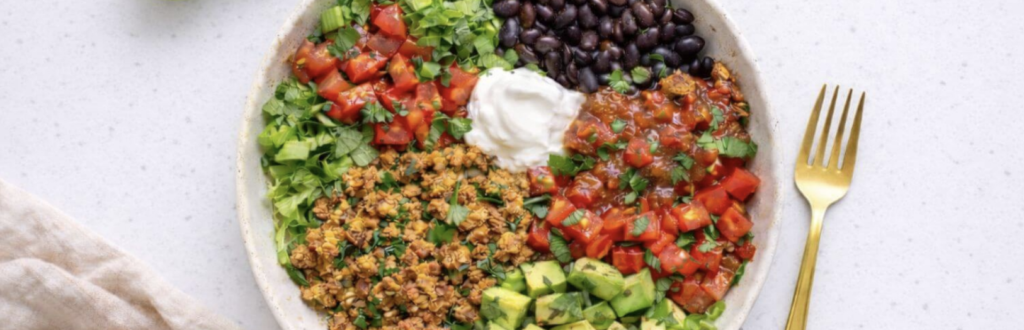
- Ground beef, beans, vegetables, and guacamole
The point is not to create a flawless plate at every meal.
It is to stop relying on random combinations of low-calorie foods and wondering why your hunger, energy, and digestion feel chaotic.
7. Your Gut Is Still Adjusting
Positive changes can still feel uncomfortable at first.
Maybe you recently started eating breakfast after years of skipping it.
Maybe you added beans, vegetables, or whole grains.
Maybe you are eating more consistently instead of grazing all day and overeating at night.
Maybe you are finally getting closer to 30 grams of fiber after averaging 10.
Your body may need time.
That does not mean you should ignore severe symptoms or force yourself to eat foods that consistently make you feel miserable. But temporary bloating during a dietary transition is not necessarily evidence that the change is harmful.
Think of it as information, not failure.
Your digestive system may be telling you to slow the increase, adjust portions, cook certain foods, drink more water, or spread fiber more evenly throughout the day.
You do not have to interpret every sensation as a reason to quit.
A Few Bloating Myths We Need to Retire
“If I’m bloated, I must have gained weight.”
Bloating can change how your stomach feels and looks throughout the day, but that does not mean you gained body fat after one meal.
Your body holds food, water, waste, and gas. Your abdomen is not supposed to look exactly the same from morning to night.
“Healthy eating should eliminate bloating completely.”
Healthy eating supports digestion, but it does not turn you into a person who never experiences gas, fullness, hormonal changes, or constipation.
You are a human being, not a flat-stomach mannequin.
“I need a cleanse.”
Your body already has systems responsible for removing waste. A detox tea that sends you sprinting to the bathroom is not healing your gut.
It is giving you diarrhea with better branding.
“I should cut out more foods.”
Sometimes a specific food intolerance or digestive condition does require targeted changes. But randomly eliminating dairy, gluten, fruit, grains, beans, and vegetables without clear evidence can leave your diet unnecessarily restrictive and nutritionally limited.
More restriction is not always more control.
Sometimes it is just more confusion.
What to Try This Week
Before you overhaul your diet or throw away every food in your kitchen, start with a few simple adjustments.
Increase fiber gradually instead of all at once.
Drink water consistently throughout the day.
Slow down and chew your meals thoroughly.
Spread higher-fiber foods across multiple meals instead of packing them into one giant salad.
Try cooked vegetables if raw vegetables regularly leave you uncomfortable.
Check packaged foods for sugar alcohols, chicory root, inulin, or large amounts of added fiber.
Build meals with protein, fiber, and healthy fats rather than eating isolated “healthy” foods.
Then give your body enough time to respond.
You may learn that you tolerate broccoli better roasted than raw. You may realize a particular protein bar is the problem, not your entire diet. You may notice that eating lunch in ten calm minutes feels completely different from inhaling it while standing at the sink.
Those small discoveries matter.
The Bottom Line
Feeling bloated after eating healthy does not mean you are doing everything wrong.
It does not mean vegetables are the enemy, fiber is bad for your gut, or your body needs another cleanse.
Often, bloating is less about one specific food and more about how quickly your diet changed, how your meals are balanced, how much water you are drinking, how fast you are eating, and how much time your digestive system has had to adjust.
Support digestion before you default to restriction.
Make small changes. Notice patterns. Stay consistent.
Because the goal is not to build a diet that keeps your stomach perfectly flat every hour of the day.
The goal is to nourish your body in a way that supports your health, energy, strength, and digestion without making you afraid of food.
And if bloating is persistent, painful, severe, or accompanied by unexplained weight loss, vomiting, blood in your stool, or major changes in your bowel habits, talk with a qualified healthcare provider. Healthy eating should support your life, not leave you regularly uncomfortable or worried.